
At the moment when suspenseful crime-themed film and television works are constantly innovating, a drama ‘Sandstorm’ that stands out with its unique image style and in-depth character portrayals has attracted widespread attention. We have the honor to invite Teacher Jian Xiaobai, the director of photography of the show, to unveil the shooting code behind this work. From the precise selection of the focal length of the lens in a large number of location shots to the wonderful chemical reaction brought to the film by the IOP function and customized optical scheme, Teacher Jian will share with us the wonderful story and creative experience of ‘Sandstorm’ from preparation to shooting. Let us follow Teacher Jian’s perspective, walk into the world of light and shadow behind this episode, and explore the ingenuity and ingenuity behind those shots.
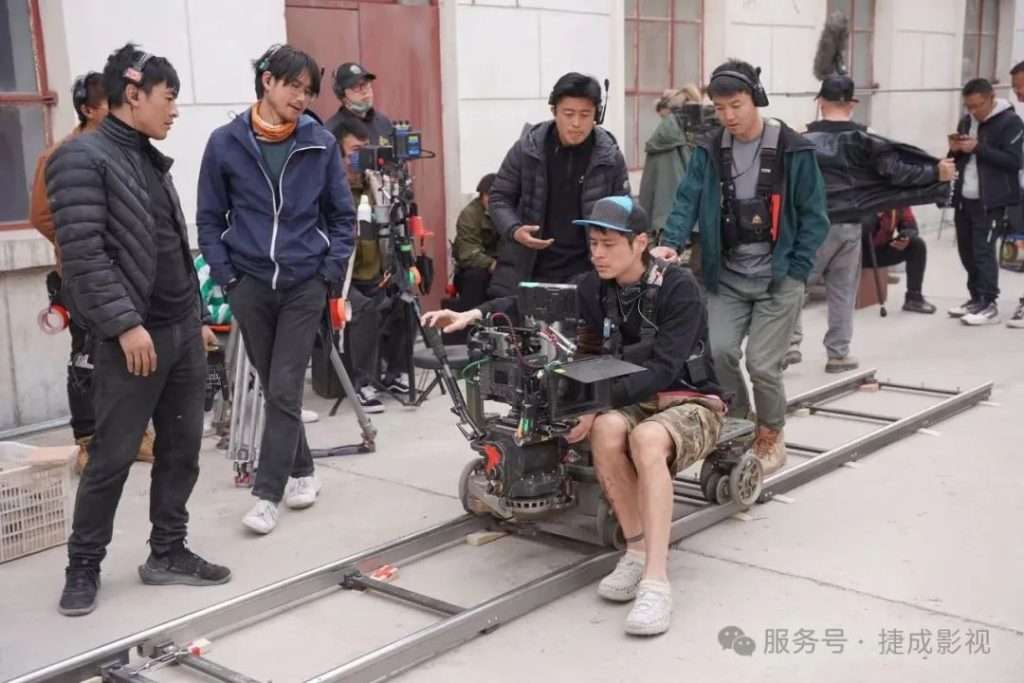
‘Sandstorm’ is a suspenseful criminal investigation drama that tells the story of two criminal police officers, an old and a new, who accidentally discovered a new serial murder while investigating an old case eight years ago. They pursued clues in different ways and finally brought the real murderer to justice. Through intricate cases, the play portrays the complexity of human nature in a harsh environment.
After you first saw the script of the criminal investigation suspense ‘Sandstorm’, what kind of image styleappeared in your mind? Does the director have any specific requirements for the video style of the film?
I finished reading the script of ‘Sandstorm’. This is the first time I have been so eager to finish reading a script in one breath. I probably saw it from more than 8 o’clock in the evening until 4 o’clock in the morning. I found that this script is really special in the construction of the underlying psychology of the characters. The day after I finished reading it, I started to study the shooting plan, only to find that the script was extremely difficult to shoot. There are not only desert scenes, but also scenes in various wilderness areas, and grassland grazing scenes have to be restored. After reading the script and discussing with the director, we originally went to the style of ‘Mad Max’, but after actually going to the scene to see the scene, we dispelled this idea. Because of that kind of strong tone, it is actually not suitable for the skin tone of our Asians, and the imaginary texture and color. The desert where the actual scene is set, its texture is sandy and rocky, and it looks black and gray. Finally, we readjusted the entire shooting plan.
Our filming location is in Gansu, where there is very plenty of sunshine. Most of them are on location. In addition, there are sand and dust scenes, which cannot be handled like ordinary suspense dramas. A lot of depressing shots are shot. Later, I thought of using an uncoated lens, because I wanted to reduce the color, reduce the saturation, and reduce the contrast, so that I could present this relatively novel crime theme.
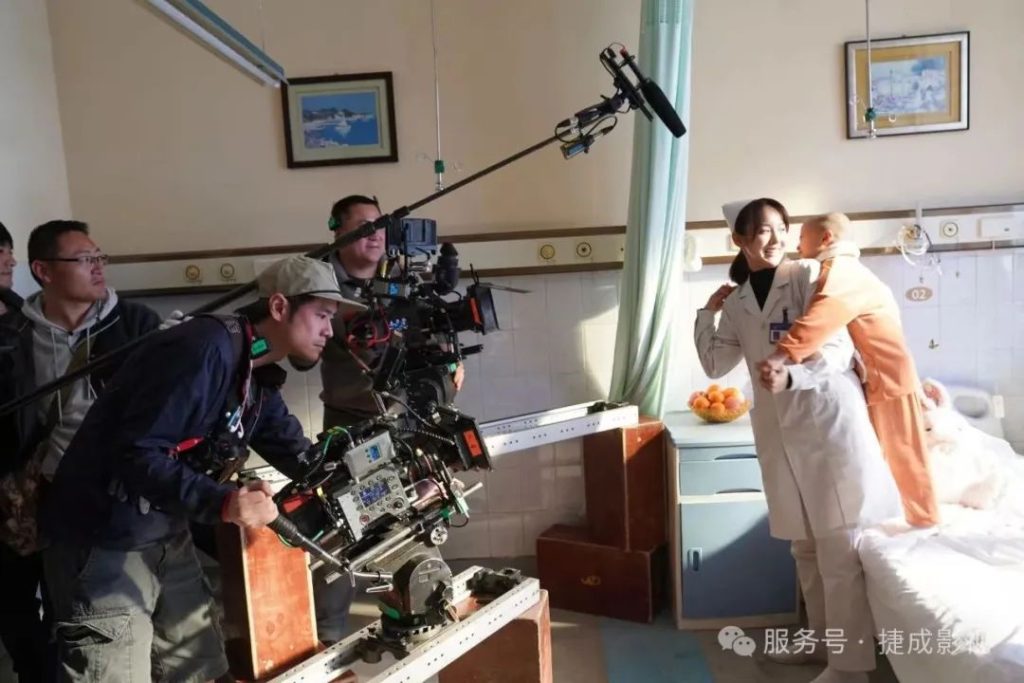
In terms of image style, there are not many restrictions. Because the director completely let me play freely. This is the first time I have worked with a director. This project is very special. It is the first time I have filmed a crime-themed work. I have shot more works on youth themes before. I just finished reading the script. The first time I met with the director was before dragging the suitcase to the airport. We had a brief chat for a while. Although the time was very short, our aura unexpectedly matched. Two weeks later, I made a video presentation to the director. He recognized my previous work very much and confirmed this cooperation. Frankly speaking, the preparation time for this play was very short. When we met the director again later, we were already watching the location together. The director’s control and maturity of this script are very good.
A large number of location filming locations this time were selected in Guazhou, Jiuquan, Gansu, which has the natural scenery of Northwest China with regional attributes. During the shooting process, what was your overall impression and evaluation of angenieux lens? Which focal length was used for this shooting? For the choice of focal length, what are the main considerations in different plots?
angenieux’s original focus was on zoom lenses. I used to only focus on zoom technology. Its zoom technology is indeed well-known in the industry. After using the fixed-focus series this time, I feel that the properties of its fixed-focus lens and the zoom lens are different. While not losing sharpness, it retains the original coating effect and color reproduction of the zoom, which makes me feel very amazing. angenieux’s lens has a very complete focal length coverage, with a total of 12 focal length segments. In all shooting scenes, each focal length can be fully utilized. Because we are shooting in real time, the selection of the focus segment needs to be controlled very accurately. If the angle is slightly biased, the presentation effect will be much worse. This drama is in full-frame mode, and full-frame is really difficult to control. If the perspective deviates a little bit, or the lens focus does not match, the viewing experience will be greatly reduced.
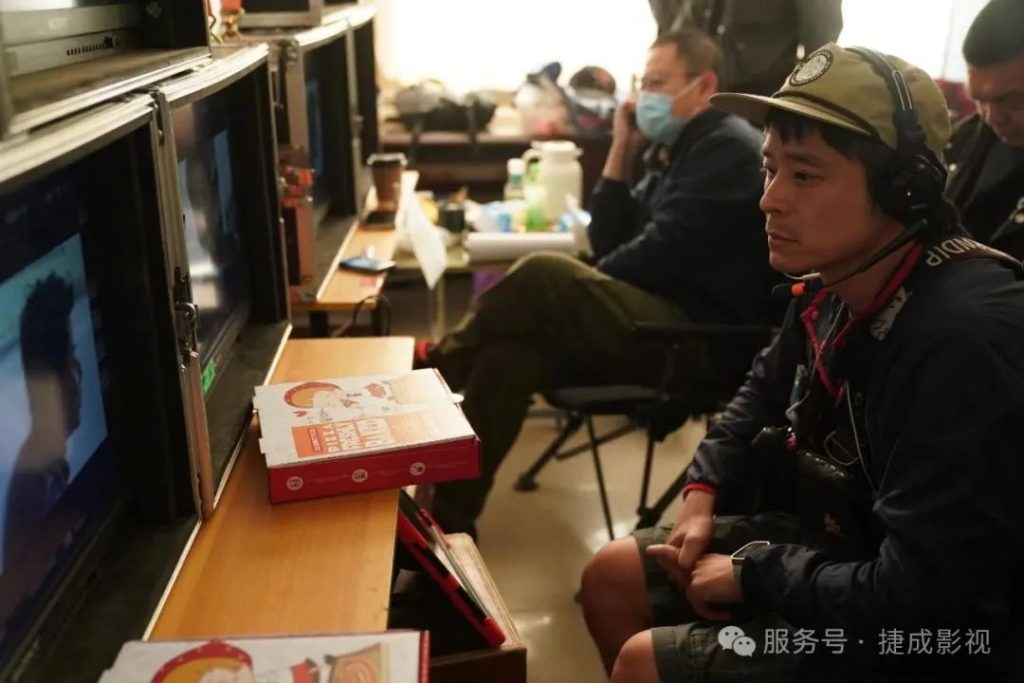
My favorite use is the two focal lengths of 21mm and 40mm. In the full-frame system, I think the perspective effects of 21mm and 40mm are the most comfortable. Moreover, our drama has been screened in theaters for two episodes. I found that the focus section selection is very suitable for watching on the big screen, or using the big TV at home to cast the screen. The visual effect is very comfortable. In addition, the 21mm and 40mm lenses bring a great sense of detachment. I personally don’t like to use lenses that are too long-focus. I think the telephoto lens will make the subject and the background appear too separated. When the background is completely blurred, it will weaken the expressiveness of the picture.
‘Sandstorm’ makes extensive useof the unique IOP integrated optical drawing board function of angenieux OP lens. The manufacturer of angenieux also provided a customized optical solution for the shooting of ‘Sandstorm’, namely OP fixed-focus lens + non-coated built-in filter + triangular diaphragm, what is the reason for this?Have you decided to activate the IOP function? What are your most direct feelings about the function of angenieux IOP?
When I first started using this triangular diaphragm film, it actually took almost a week or two to slowly master the trick. It was very helpful for the shaping of my film, characters and character relationships. I was not familiar with it at first. Sometimes when there are too many triangular spots in the background when shooting a night scene, there will be a sense of visual conflict. After many attempts, when a specific scene is needed, I will try to turn off the excess lights in the background. I only keep some triangular elements in the back so that the audience can feel the transformation of the character and his inner struggle.
The triangular spot outside the focal point is still very special in this play. In the plot, they are a relationship of complicity and complicity, a game of reason and law. This relationship has been circulating between the three of them and among this group of people. Through the refraction of light and shadow, the triangular metaphors of love, reason, and law are hidden. Our ending is actually open-ended. Basically all secrets and everything are the one-sided words of the heroine. Only she knows the whole truth, and everyone else can only understand it through her perspective, so what happened in the middle, we left a lot of imagination for the audience.
In addition to the bold use of triangular apertures in this film, we also customized non-coated built-in filters with manufacturers. In Hollywood or abroad, they will use the process of cleaning off the coating on the front of the lens. But this time we used a central uncoated optical filter inside the lens. At first, I felt that there was still a certain gap between the effect of traditional craftsmanship. But then it was discovered that it has a unique charm. It is between the characters, the lens and the background that a sense of layering is actually formed, such as a frosted effect or some kind of special relationship. When it reduces the contrast and color reproduction of all elements, I think this is exactly the effect I want. After the director watched it, he also felt that this effect was very special.
What kind of subject material do you think angenieux lens is more suitable for from the perspective of color and style?
I don’t think you can judge a certain shot by a play alone. In fact, the shot is alive, and each shot has its own unique personality. I personally don’t like those sharp edges with too high resolution. With a little back pat or a little down pat, many lines will be deformed immediately. I feel that angenieux has done a good job on this side, especially angenieux’s handling of character details, such as the details of the skin, the texture is not that soft, but it will not transition to sharpness. I am very satisfied with its color reproduction and aperture performance.
What are your new plans next? What new attempts do you want to participate in?
The director of this film and I are already communicating. We will make another crime-themed project in about July or August, which is also a similar work that explores human nature. I will also try to choose angenieux’s OP lens, but I hope that the manufacturer can continue to introduce some new optical filters and give us more new elements so that we can make bolder attempts. Frankly speaking, the late color grading function can already simulate the characteristic effects of many lenses. But what I personally think cannot be replaced is the depth of field and focal length of the lens, which gives the picture, the characters and the background, and the chemical reaction between them. How you choose the right lens to complete the shooting is very critical. My shooting habits are quite special. Many photographers like to do LUT color grading in advance, but I basically don’t do these. I will first let the director look at the most original 709 material first, so that he can have an intuitive feeling first. After he finishes reading it, we will do the post-color grading for him, and he will be surprised that the difference is so big.
Are there many shoulder-mounted cameras in this drama?
Basically they are all shoulder-mounted, and the dynamic sense we designed in the first two episodes is stronger. Later, many viewers reported that our shooting style was a bit hand-held and shaking, and we felt a little dizzy. Because this is the first episode, it is the scene where Teacher Duan and the police officer are talking outdoors, and the camera is shaking very obviously. We shot this way because the plot mentioned that a sandstorm is coming. In fact, the wind is really strong, but we can’t feel the real physical dynamic effect when shooting on the spot. In fact, we are simulating the state of strong winds, which indicates that many things are about to happen. Gradually in the next few episodes, the picture will slowly stabilize, because we want to create another emotional atmosphere. Before the shooting started, I was a little uneasy. We are going to shoot from mid-March to May, during which the four seasons have changed, from the snowy season to the desert scene, we have to switch between high and low temperature environments. angenieux lens is very stable, which makes us feel very at ease when shooting on the spot.
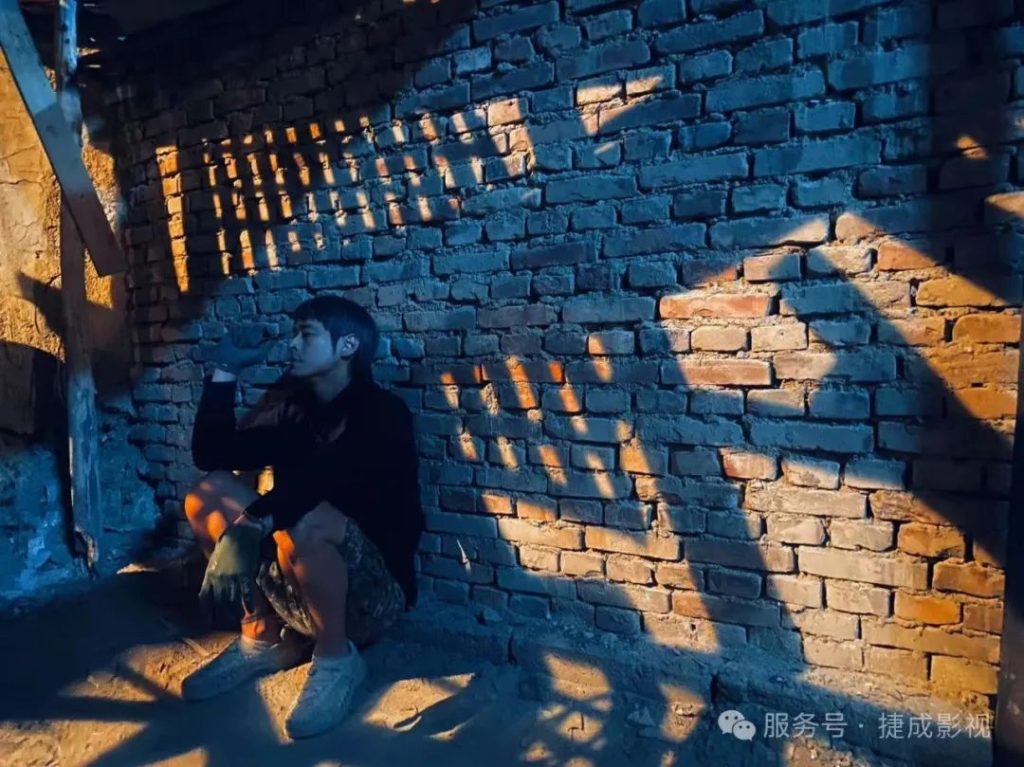
Duringthe entire filmingprocess,which scene impressed you the most?
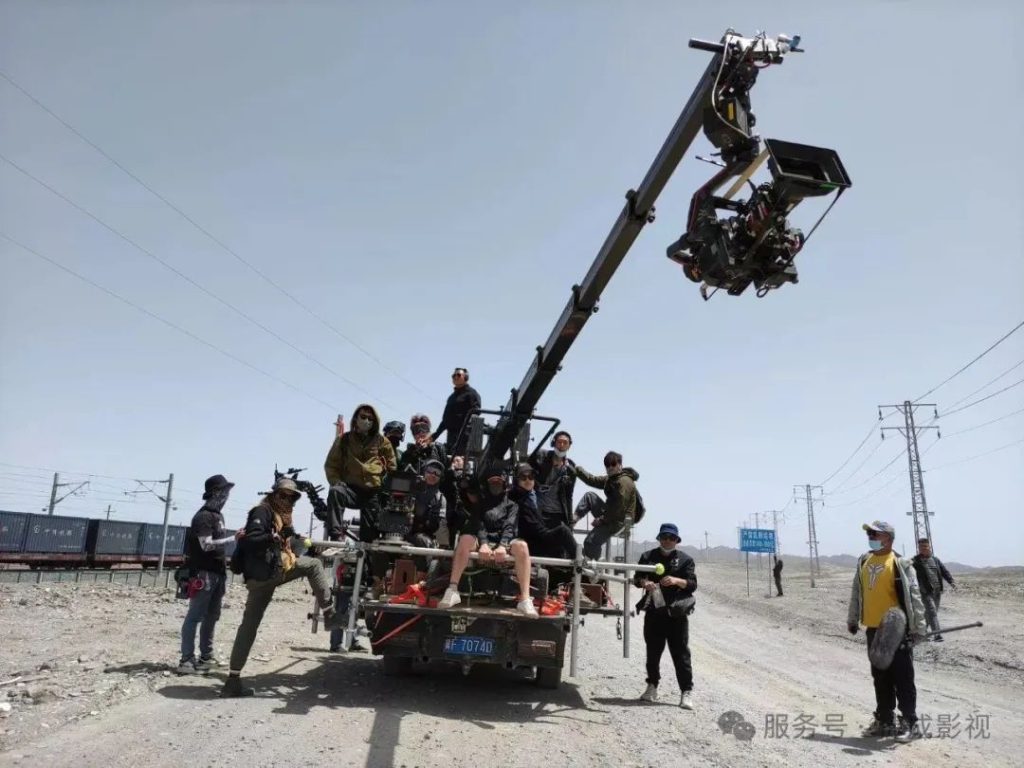
I think it’s the last episode. We ran wild in the desert, filming a car chase, and the entire in-car conversation. We filmed for seven days. This plot needs to take place within 1 hour after sunset. We have to cooperate with the actors well. We spend most of our time rehearsing, rehearsing, and rehearsing again. One of the scenes that I was particularly impressed with was that the actor’s whole body fell into the sand and was swallowed up a little bit, as if his life had come to an end. The director asked: “Shoot the real feeling of the actor falling”’ To this end, we designed a mechanical device. We tested that device for a long time. The original plan was that people would slowly sink when they stood on it, but later it was found that the amount of engineering was too large, and the effect did not seem to meet expectations. Later, our art and physical special effects team dug a giant pothole in the desert and built an underground passage. When the sand flow went down, the actors could run out from the other side. But we have been tossing this design for a long time, because the quicksand in the desert is really difficult to fix, and it will continue to collapse. Later, we dug up a large area of desert, used wooden planks, and then poured cement to make a tunnel, and then backfilled the sand. We also boldly tied the camera directly to the actor, clung to the actor, and fell with him. The design of this lens scene, in order to avoid damage to the machine and the lens, a wiper was installed in front of it, and the sand was cleaned up all the time, but it was found that it was not enough at all. We could only barely complete the shot by blowing with an air pump non-stop. When this shot was finished, it felt very interesting and shocking.
Duringthe entire filmingprocess,which scene impressed you the most?
I think it’s the last episode. We ran wild in the desert, filming a car chase, and the entire in-car conversation. We filmed for seven days. This plot needs to take place within 1 hour after sunset. We have to cooperate with the actors well. We spend most of our time rehearsing, rehearsing, and rehearsing again. One of the scenes that I was particularly impressed with was that the actor’s whole body fell into the sand and was swallowed up a little bit, as if his life had come to an end. The director asked: “Shoot the real feeling of the actor falling”’ To this end, we designed a mechanical device. We tested that device for a long time. The original plan was that people would slowly sink when they stood on it, but later it was found that the amount of engineering was too large, and the effect did not seem to meet expectations. Later, our art and physical special effects team dug a giant pothole in the desert and built an underground passage. When the sand flow went down, the actors could run out from the other side. But we have been tossing this design for a long time, because the quicksand in the desert is really difficult to fix, and it will continue to collapse. Later, we dug up a large area of desert, used wooden planks, and then poured cement to make a tunnel, and then backfilled the sand. We also boldly tied the camera directly to the actor, clung to the actor, and fell with him. The design of this lens scene, in order to avoid damage to the machine and the lens, a wiper was installed in front of it, and the sand was cleaned up all the time, but it was found that it was not enough at all. We could only barely complete the shot by blowing with an air pump non-stop. When this shot was finished, it felt very interesting and shocking.
Do you make many color adjustments in the later stages of the whole film?
For this project, the color grading alone was adjusted for a full two months in the late stage. We were basically doing tests the month before, and we were all testing repeatedly. Because the color of the desert is too close to the skin color of Asians, I think this is a technical difficulty. How do we color the desert scene, while targeting the skin color of Asians, we must also ensure that the colors are clearly layered. We actually did a lot of tests in this part. The final effect, whether it is the background or other elements, can basically be clearly layered, and each part exists independently.
Photo provided by: Photography director Jian Xiaobai